
BLOG
What is metalworking? A complete breakdown of 5 major machining methods to help you choose the right manufacturing process.
With so many metalworking methods available, which one should you choose? This article provides a complete explanation of the principles and selection logic behind five major processes—cutting, stamping, forging, and laser cutting—and introduces the corresponding equipment to help you avoid unnecessary mistakes.
When a factory receives a new order, introduces a new production line, or faces unstable yield in an existing process—the first question that usually comes up is: “What manufacturing process should be used for this part?”
There is more than one way to process metal, and each method has its own suitable materials, production scale, and precision requirements. Choosing the wrong process not only affects quality, but also delays lead time and increases cost.
This article starts from the definition of metalworking and provides a complete overview of the principles, characteristics, and applicable scenarios of five major processing methods, along with corresponding equipment choices, giving you a clear starting point when evaluating manufacturing processes.
1. What is Metalworking?
Metal processing refers to the manufacturing process of transforming raw metal materials into parts or structural components with specific shapes, dimensions, and properties through various physical or chemical methods.
Metalworking is widely used in sheet metal fabrication, aerospace components, automotive parts, precision machinery, and architectural hardware, making it the foundation of the entire manufacturing industry.
From a factory perspective, the choice of processing method directly determines:
- Whether the part can be manufactured
- Whether the achieved precision and strength are sufficient
- Whether the production cost is reasonable for the given batch size
2. Five Major Metalworking Methods
1. Machining
Machining is a manufacturing process that uses cutting tools to remove excess material from a metal workpiece in order to achieve the desired shape and dimensions. It includes operations such as turning, milling, and drilling. Modern factories typically use CNC (Computer Numerical Control) machines to ensure stable and repeatable accuracy across batches.
| Characteristics | Description |
| Precision | High, tolerances can reach within ±0.01mm |
| Applicable materials | Steel, aluminum alloys, copper, stainless steel, and most metals |
| Production scale | Suitable for small to medium batch production |
| Main drawback | High material waste due to chip removal |
Best suited for: High-precision mechanical parts, shaft components, mold parts, or product development stages that require flexible design modifications.
2. Laser Cutting
Laser cutting is a non-contact machining process that uses a high-power focused laser beam to irradiate metal sheets. The material is locally melted or vaporized to form a cut. Because the laser beam is extremely fine (cutting kerf is approximately 0.1–0.5mm), it offers high precision and smooth cut edges. It also allows fast switching between designs without the need for tooling or molds, making it one of the most widely used blanking processes in modern sheet metal fabrication shops.
| Characteristics | Description |
| Precision | High, with tolerances controlled within ±0.05mm |
| Applicable materials | Carbon steel, stainless steel, aluminum sheets, and other mainstream metal sheets |
| Production scale | Flexible for small to large batch production |
| Main drawback | High energy consumption; cutting speed decreases on thicker materials |
Best suited for: Complex profile parts, rapid prototyping, sheet metal enclosures, and modern low-volume high-variety production. Compared to stamping, laser cutting does not require molds, offers faster setup changes, and provides greater flexibility in order handling.
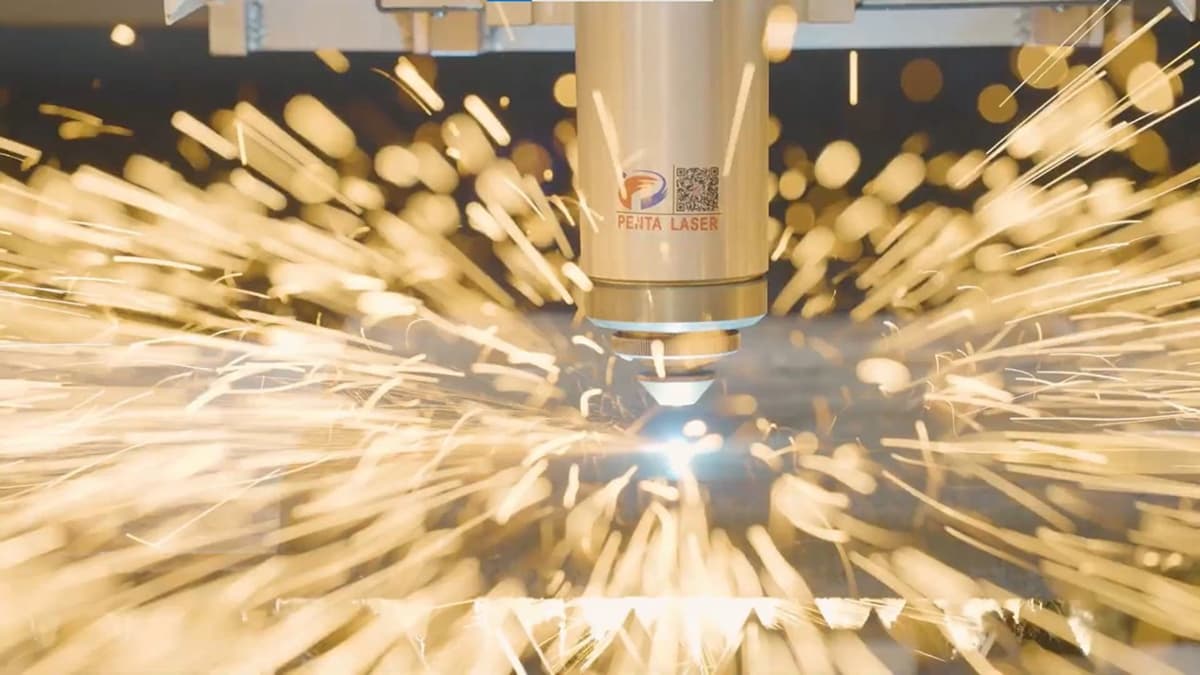
"Penta fiber laser cutting machine, suitable for mainstream metal materials such as carbon steel, stainless steel, and aluminum sheets."
Chuan Zeng Precision Agent: Penta Laser Cutting Machine Series
We represent the Penta laser series, offering multiple machine models tailored to different plate thicknesses and production capacity requirements:
| Machine Series | Features | Application |
| BOLT Series | High-speed cutting, stable output | Mainstream production of carbon steel and stainless steel |
| SWING Series | Large-format cutting | Large sheet metal processing |
| AWING Series | High-power configuration | Thick plate cutting applications |
| BULL Series | Heavy-duty structure | Long-duration high-intensity production |
Factories that need tube processing can also refer to the Penta Laser Tube Cutting Machine Series, which handles both sheet and tube cutting in one system.
Learn more about the full Penta Laser Cutting Machine lineup
3. Sheet Metal Bending (Press Brake Bending)
After laser cutting, the next step is usually bending—forming flat sheet metal into 3D structural components according to design drawings. Traditional hydraulic press brakes rely on operator experience, resulting in inconsistent repeatability. Modern servo press brakes use electric servo motors for actuation, significantly improving bending accuracy and repeatability while eliminating the maintenance issues associated with hydraulic oil.
| Characteristics | Description |
| Precision | Servo systems can achieve ±0.01mm repeat positioning accuracy |
| Applicable materials | Carbon steel sheets, stainless steel sheets, aluminum sheets |
| Production scale | Suitable for single-piece to mass production |
| Main advantages | No hydraulic oil contamination, fast response, energy-efficient operation |
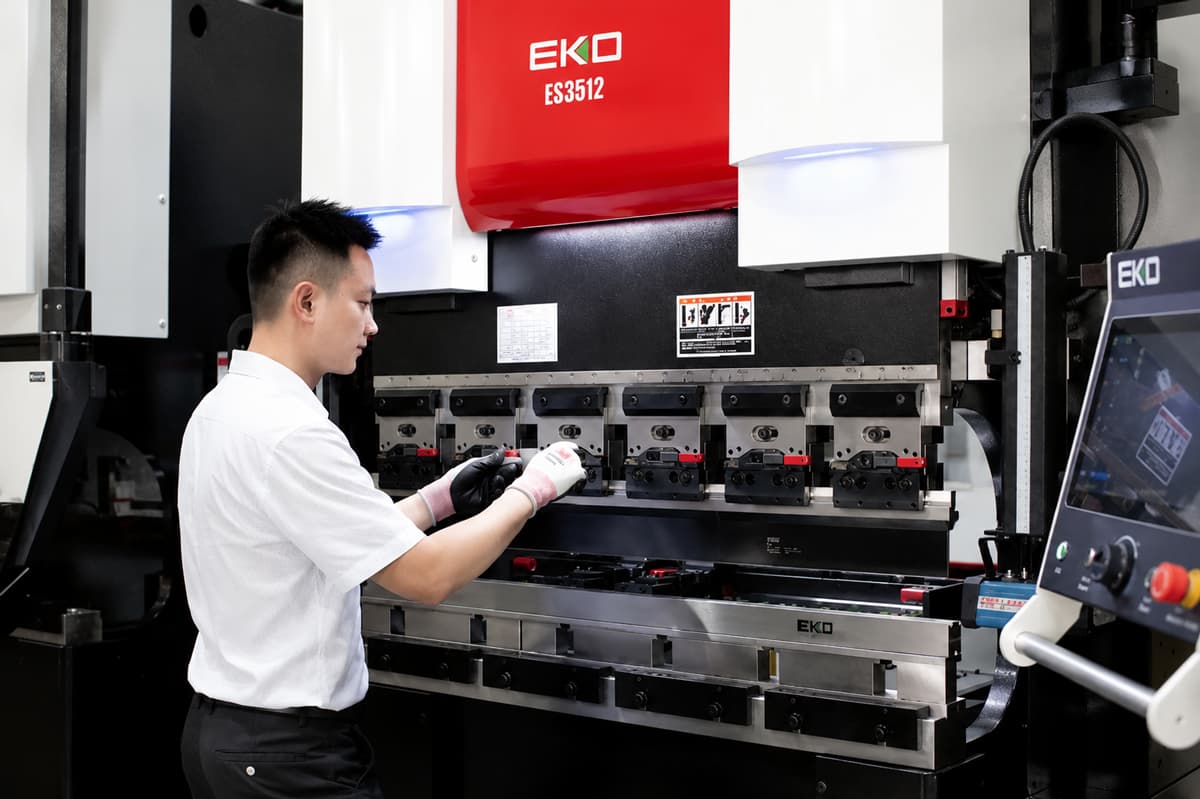
"ES Series servo press brakes offer multiple tonnage options to meet different requirements for sheet thickness and workpiece size."
Chuan Zeng Precision Agent: ES Series Servo Press Brake
The ES series servo press brakes provide a full range of specifications from light-duty to heavy-duty models, allowing selection based on sheet thickness, bending length, and daily production capacity requirements:
| Model Series | Recommended Application | Link |
| ES6020 | Small lightweight parts | View specs |
| ES1253 | Medium sheet metal parts | View specs |
| ES2004 | Large sheet metal bending | View specs |
4. Deburring & Surface Grinding
After laser cutting or stamping, metal sheet edges often have burrs, slag, or oxide layers remaining. If these are removed manually, efficiency is low and quality consistency is difficult to control. Automated deburring and grinding equipment can perform chamfering, edge removal, and brushing in a single pass as the sheet moves through the machine, significantly reducing post-processing time.
Surface grinding further improves flatness and surface roughness, providing a better base material condition for subsequent surface treatments such as anodizing or electroplating.
| Process | Purpose | Typical Equipment |
| Deburring / Chamfering | Remove cutting burrs, prevent injuries, improve assembly accuracy | LINAS LSP Series |
| Brushing / Polishing | Enhance surface finish and reduce roughness | LINAS LSG Series |
| Slag Removal | Remove slag remaining after laser cutting | LINAS LSB / LSP Series |
| Surface Flattening Grinding | High-precision flat surface requirements | TWIN / PORTAL / OMNI Series |
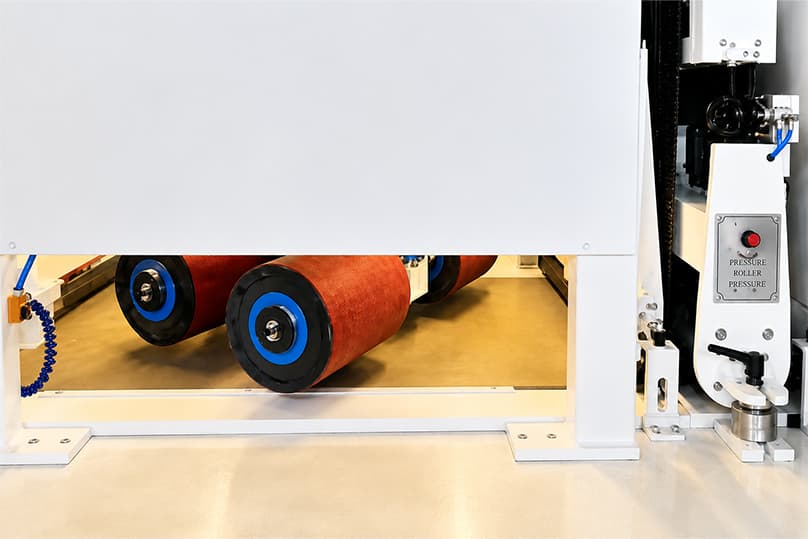
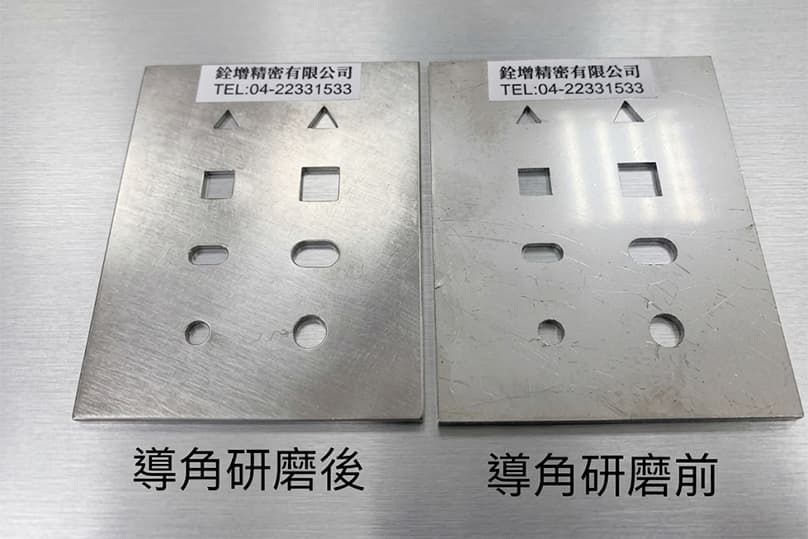
"LINAS LSP/LSG series completes multiple processes such as chamfering, deburring, and brushing in a single pass."
Chuan Zeng Precision Agent: LINAS Deburring & Grinding Equipment Series
- LSP Series – Deburring / Chamfering Equipment: Automated removal of burrs and slag after laser cutting, with multiple models for different sheet widths (800mm / 1000mm / 1350mm / 1600mm)
- LSG Series – Brushing / Polishing Equipment: Dry / wet options available, suitable for stainless steel and aluminum parts requiring high surface quality
- Surface Grinding Machines TWIN / PORTAL / OMNI: Suitable for post-forming surface grinding and weld seam finishing
Learn more about the deburring and grinding equipment series
5. Forging
Forging is a manufacturing process in which metal is plastically deformed through hammering or pressing. It is divided into hot forging (forming after heating) and cold forging (forming at room temperature). After forging, the metal’s internal grain structure becomes dense and aligned, resulting in significantly higher strength and toughness compared to cast parts, making it an essential method for producing high-load components.
| Characteristics | Description |
| Precision | Relatively low; usually requires secondary machining for finishing |
| Applicable materials | Steel, aluminum alloys, titanium alloys, etc. |
| Production scale | Medium to large batch production |
| Main advantages | High equipment investment; limited ability to form complex shapes |
Best suited for: Aerospace structural components, automotive drivetrain parts, and high-load mechanical parts that require high strength. Forged parts are typically followed by CNC machining to achieve final dimensional tolerances.
3. Complete Sheet Metal Production Line Process
For sheet metal factories, a part typically goes through the following stages from raw material to shipment. Understanding the full process helps determine which stage needs upgrading or improvement:
Raw sheet material
[Laser Cutting / Stamping] — Blank forming
[Deburring / Slag Removal] — Edge finishing
[V-CUT Grooving] — Pre-bending processing (optional)
[Press Brake Bending] — 3D forming
[Welding Assembly] — Structural joining
[Surface Grinding / Polishing] — Surface quality control
[Surface Treatment] — Painting / Plating / Anodizing (outsourced)
Finished product shipment
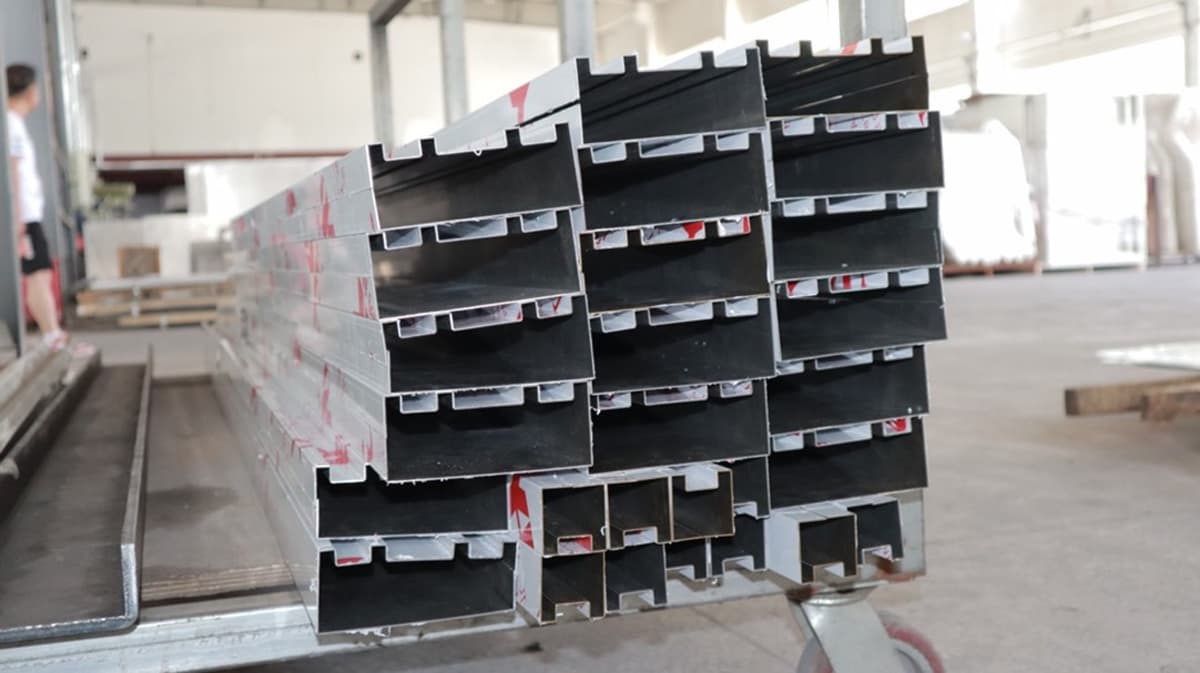
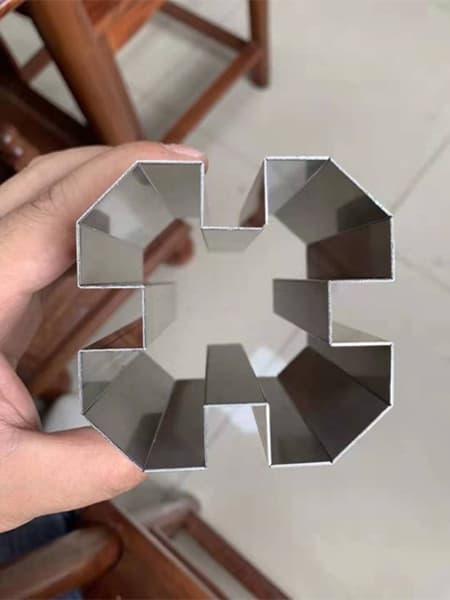
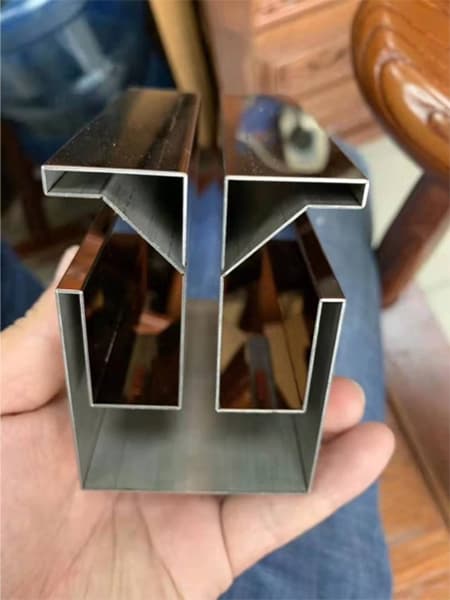
"The V-CUT grooving machine creates a V-shaped groove on the back of the sheet before bending, allowing for more precise angles and reduced bending force."
Before bending, many factories add a V-CUT grooving process—cutting a V-shaped groove on the back of the sheet. This reduces the required bending force and improves angular accuracy, especially for stainless steel or thicker materials.
Learn more about the fully automatic four-side grooving machine
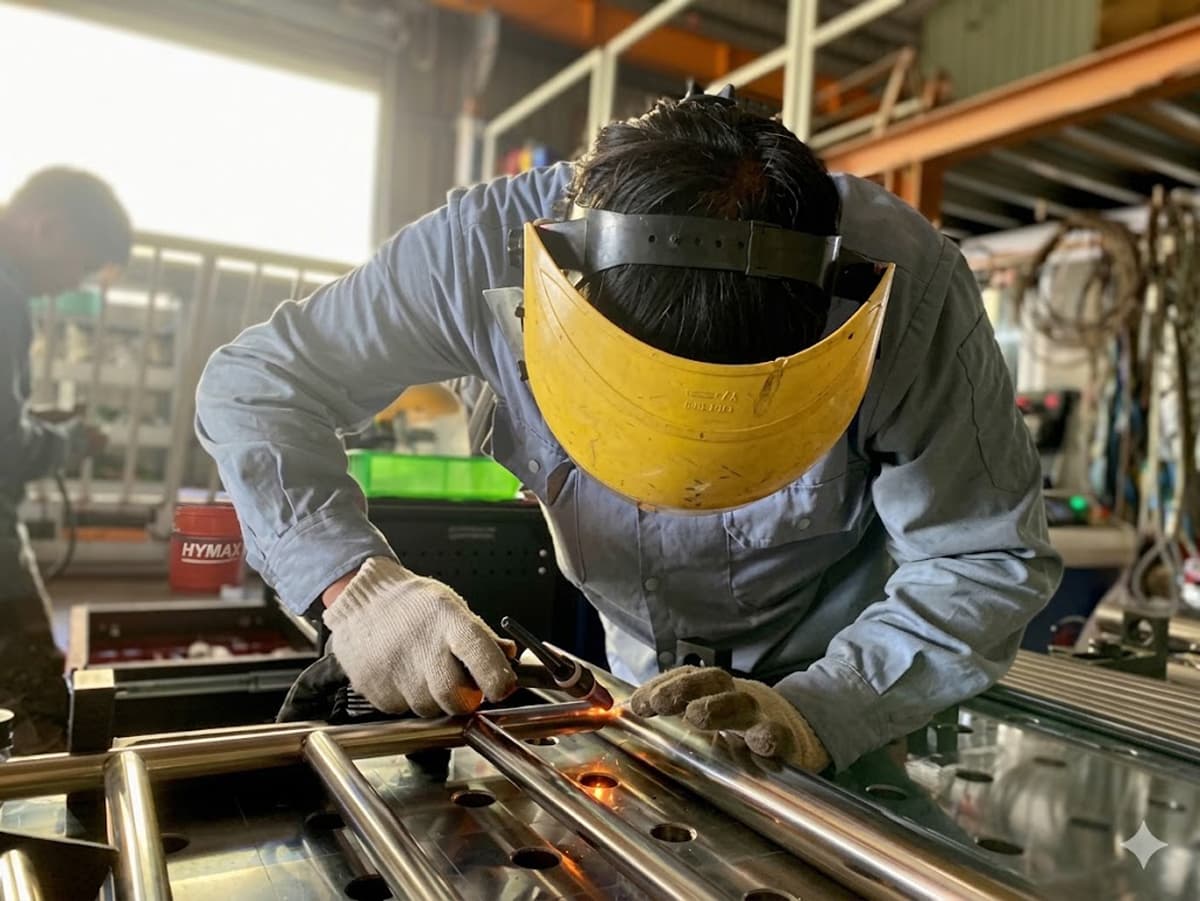
"The 16/28 series welding workbench features a 3D hole positioning system, significantly reducing fixture setup time."
After bending, structural parts move into welding assembly. A good welding workbench allows operators to quickly position and secure workpieces, ensuring accurate welding positions and preventing deformation or dimensional deviation caused by unstable fixtures.
Learn more about the welding workbench series
4. How to Choose the Right Manufacturing Process and Equipment
When evaluating manufacturing processes, factories often make the mistake of relying on familiar methods instead of selecting the most suitable process for the product. Below is a practical decision framework:
Step 1: Define design tolerance requirements
- Tight tolerances (within ±0.02mm) → prioritize CNC machining
- Sheet metal profiles with moderate tolerance → laser cutting
Step 2: Evaluate production volume
- Low volume / high mix, frequent changeovers → laser cutting + servo press brake
- High volume, fixed geometry → stamping (lowest cost per unit)
- Medium volume with high strength requirements → forging + finishing
Step 3: Check material and thickness
- Thin sheets (0.5–6mm) → laser cutting or stamping
- Medium to thick plates (6–25mm) → high-power laser cutting
- Solid bars or 3D parts → CNC turning/milling
Step 4: Plan post-processing requirements
- Burrs after laser cutting → add deburring equipment
- High surface quality required → add grinding/polishing process
- Final painting or plating → ensure surface roughness meets coating requirements
In practice, it is recommended to have equipment suppliers visit your factory to understand your parts and production needs. Only by identifying the real bottlenecks can you find the right solution.
5. Quick Comparison Table of Metalworking Processes
| Process | Precision | Production Scale | Tooling Required | Main Advantage |
| CNC Machining | ★★★★★ | Small to medium batch | No | High precision, strong design flexibility |
| Laser Cutting | ★★★★☆ | Small to large batch | No | Flexible, fast changeover |
| Press Brake Bending | ★★★★☆ | Single piece to mass production | No | 3D forming, high precision with servo systems |
| Stamping | ★★★☆☆ | Large batch | Yes | Fast production, low unit cost |
| Forging | ★★★☆☆ | Medium to large batch | Yes | High strength, excellent structural integrity |
6. Frequently Asked Questions (FAQ)
Q: Which is better, laser cutting or CNC machining?
A: If the part is a sheet metal profile with complex shapes and requires fast changeover, choose laser cutting. If the part is solid material or requires 3D machining and high-precision hole positioning, choose CNC machining.
Q: Is deburring necessary after laser cutting?
A: It depends on downstream process requirements. If the part will be welded, painted, or assembled, deburring and chamfering are recommended to improve safety and ensure stable post-processing quality.
Q: What is the difference between servo press brakes and traditional hydraulic press brakes?
A: Servo press brakes are driven by electric motors, offering higher repeat positioning accuracy and faster response. They also eliminate the need for hydraulic oil, resulting in lower maintenance costs, making them the mainstream choice in modern sheet metal factories.
Q: Is V-CUT grooving always required?
A: It is not mandatory. However, for stainless steel, thick plates, or applications requiring high bending accuracy, grooving significantly improves bending quality and reduces required bending force, making it valuable for high-precision parts.
Q: How do I evaluate which equipment my production line needs?
A: It is recommended to have equipment suppliers conduct an on-site evaluation to understand your part types, production volume, and current bottlenecks. Because every factory is different, there is no one-size-fits-all solution.
Conclusion
The core question in metalworking is never “which process is best,” but rather “which process best fits your product, production volume, and quality requirements.”
From laser cutting and deburring, V-CUT grooving, press brake bending, to welding assembly and surface grinding, a complete sheet metal production line is composed of multiple interconnected processes. If any stage is not properly executed, the final product quality will be affected.
If you are planning a new production line, evaluating equipment upgrades, or facing bottlenecks in your current process, we can visit your site to understand your situation and help identify the most suitable equipment combination.
This article is suitable for production and procurement decision-makers in sheet metal factories, machinery manufacturers, automotive parts suppliers, and aerospace component manufacturers.


